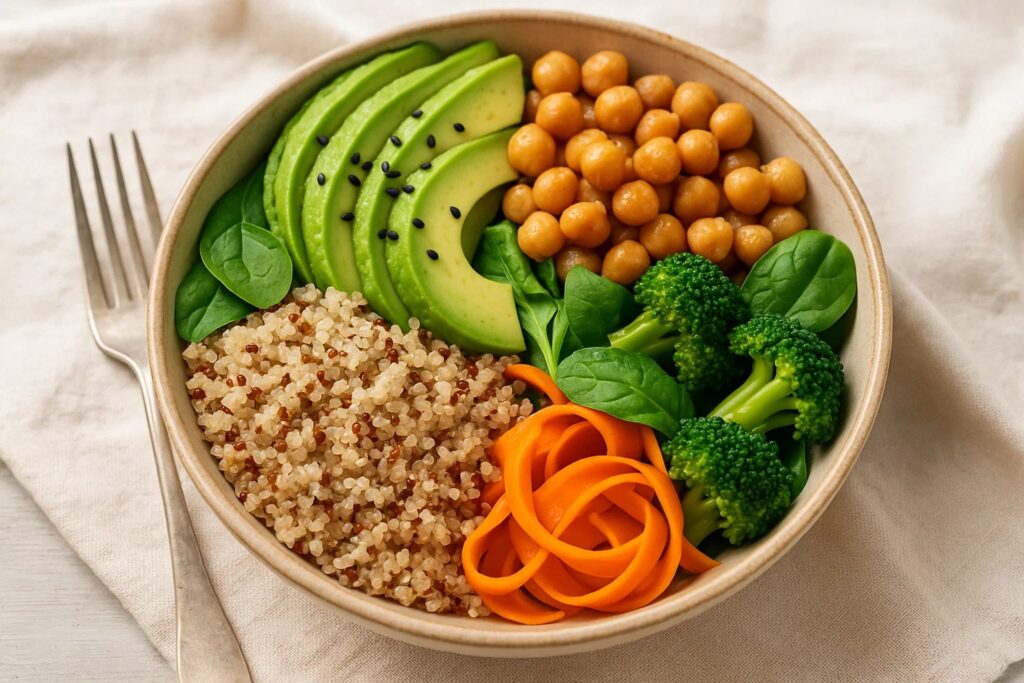
There is something deeply comforting about a bowl of food that’s both nourishing and satisfying. The Chickpea and Quinoa Buddha Bowl fits that bill effortlessly. While there are countless variations of grain bowls in the plant-based world, this one stands out not because it tries to be trendy, but because it delivers on all the essentials: balanced nutrition, taste, and adaptability.
Unlike meals that rely heavily on processed ingredients, this bowl brings it back to basics. Quinoa, a humble seed often mistaken for a grain, serves as a soft, fluffy base. Chickpeas—those nutty, creamy legumes—offer hearty texture and plant-based protein. When paired with a medley of vegetables, healthy fats, and an intentional dressing, this bowl becomes more than just a lunch. It’s a full-body recharge.
What’s Behind the Bowl?
Let’s break down the building blocks of this power-packed dish and explore what makes each component valuable not just nutritionally, but culinarily.
Quinoa: The Quiet Superfood
Quinoa is often described as a superfood, and for good reason. Unlike most plant foods, it’s a complete protein, which means it contains all nine essential amino acids your body can’t make on its own. That alone makes it a strong choice for anyone eating a more plant-forward diet. But it also brings magnesium, iron, B-vitamins, and fiber to the table.
Plus, it’s quick-cooking—ready in about 15 minutes—and has a subtle nutty flavor that plays well with any number of dressings or toppings.
Chickpeas: Affordable Protein with Staying Power
Also known as garbanzo beans, chickpeas have been a staple in diets across the Middle East, India, and North Africa for centuries. They’re affordable, accessible, and incredibly versatile. A single cup of cooked chickpeas packs about 15 grams of protein and a generous dose of dietary fiber. That combination helps you feel full longer, supports digestion, and contributes to steady energy levels throughout the day.
Roasting them with olive oil and spices like cumin, paprika, and garlic powder brings out a delicious crunch and adds complexity to your bowl.
Supporting Cast: Vegetables, Fats, and Dressings
While quinoa and chickpeas lay the foundation, it’s the supporting ingredients that turn this into a memorable meal.
Colorful Vegetables
Adding raw, steamed, or roasted vegetables gives the bowl both color and variety. Think:
- Roasted sweet potato cubes for natural sweetness
- Steamed broccoli for added fiber and vitamin C
- Shredded carrots or red cabbage for crunch and color
- Cherry tomatoes for a juicy, tangy contrast
Healthy Fats
Incorporating healthy fats makes the bowl more satisfying and helps with nutrient absorption. Sliced avocado, a drizzle of tahini, or a sprinkle of sunflower or hemp seeds all do the job beautifully.
Dressings That Tie It All Together
A dressing brings the entire bowl together. A creamy lemon tahini sauce is a classic choice, but a balsamic vinaigrette or a miso-ginger blend can be just as impactful. The key is to make sure your dressing adds depth and ties the ingredients into a cohesive dish.
Nutritional Benefits at a Glance
This Buddha bowl isn’t just pretty on a plate—it’s a workhorse when it comes to nutrition. Here’s a quick overview of what it supports:
- Muscle Repair and Growth: Thanks to the complete protein in quinoa and the high protein content in chickpeas.
- Digestive Health: Fiber from chickpeas, quinoa, and vegetables promotes healthy digestion and regularity.
- Heart Health: Chickpeas have been shown to reduce LDL cholesterol levels, and healthy fats like avocado support cardiovascular wellness.
- Balanced Energy: The combination of complex carbs, healthy fats, and protein ensures slow energy release and reduces crashes.
Ideal for Meal Prep
Another reason this bowl is a standout? It’s incredibly meal-prep friendly. Cook a batch of quinoa and roast a tray of chickpeas and veggies on Sunday, and you’ll have lunches or dinners ready for days. Store components separately to preserve texture, and mix and match dressings to keep things interesting.
Customization Tips
One of the biggest advantages of the Chickpea and Quinoa Buddha Bowl is its versatility. You can:
- Swap quinoa for brown rice or couscous
- Add fermented foods like kimchi for gut health
- Use seasonal vegetables to keep it fresh year-round
- Make it spicy with chili flakes or a sriracha drizzle
This bowl doesn’t demand perfection—it welcomes improvisation.
There’s a reason the Chickpea and Quinoa Buddha Bowl has become a modern staple. It’s more than just a recipe; it’s a template for how to build meals that nourish you, keep you full, and taste great every single time.
In a world full of diet fads and complicated meal plans, sometimes the most satisfying food is also the simplest. And in the case of this Buddha bowl, simple doesn’t mean boring. It means building a plate that reflects balance, intention, and nourishment.
So next time you need a dependable, healthy meal—whether you’re cooking for one or feeding a crowd—reach for the chickpeas and quinoa. Your body (and your taste buds) will thank you.
The written content on this page was generated by ChatGPT.